Blog · 19 January 2024 · 3 min read
Refurbished and the planet, what does it give?
Refurbished and the planet, what does it give?
Blog · 19 January 2024 · 3 min read
Refurbished and the planet, what does it give?
Article automatically translated from French.
Cheaper than new ones, refurbished electronic products have a significant impact on our savings. Now, we also have scientific proof that they contribute to preserving our planet.
It's official: refurbished tech takes care of the planet.
At URBAK, a company based in Switzerland, in Geneva and Lausanne, specialising in the purchase, resale and repair of electronic devices, we had the intuition that refurbished devices could be better for the environment than new ones. However, this intuition required concrete evidence.
To do this, the ADEME (Agency for the environment and energy management) has independently studied the environmental impact of refurbished products. It was crucial to obtain precise figures, not only for us, but also for all global players in this industry. The ADEME has therefore initiated the first large-scale study on the environmental impact of refurbished products.
The ADEME began its research in 2020 and published, in January 2022, preliminary data showing that refurbished smartphones have a significantly lower environmental impact than new devices. The complete ADEME report, now available, provides an overview of the global impact of refurbished products, in particular computers, tablets, desktop computers and smartphones. This study excludes monitors, keyboards and mice.
The 2022 ADEME report uses the life cycle assessment (LCA) methodology. This method evaluates the environmental impact of a product, process or service by taking into account all stages of its life. It is therefore considered a comprehensive approach. In this case, the LCA methodology was applied to laptops, desktop computers, smartphones and tablets to assess the entire new to refurbished supply chain.
All these factors have been evaluated on a global scale, making these data valid everywhere in the world.
To measure the impact of refurbished (and new device manufacturing) on the environment, the ADEME report takes into account many key performance indicators. Notably, the following four types of environmental impact:
The impact of refurbished devices also depends on the duration of use of the device during its “first life” (i.e. before refurbishment) and the estimated duration of its new life (after refurbishment). We call this device usage scenarios.
Generally, the usage scenario assumes that the refurbished product was first bought new, used for a certain period, refurbished, and then reused for another period of time. The study also assumed the following averages:
Please note that these are “prudent” usage scenarios to avoid overestimating the environmental benefits of refurbishment.
The impact of a device also depends on where it is purchased, repaired and sold. For example, it is rare for a device to be purchased, repaired and sold in the same country. The report integrated three scenarios, from “worst” to “best” in terms of environmental impact:
Come to Jonction or Bel-Air, or write to us at info@urbak.ch.
See repairs Refurbished smartphones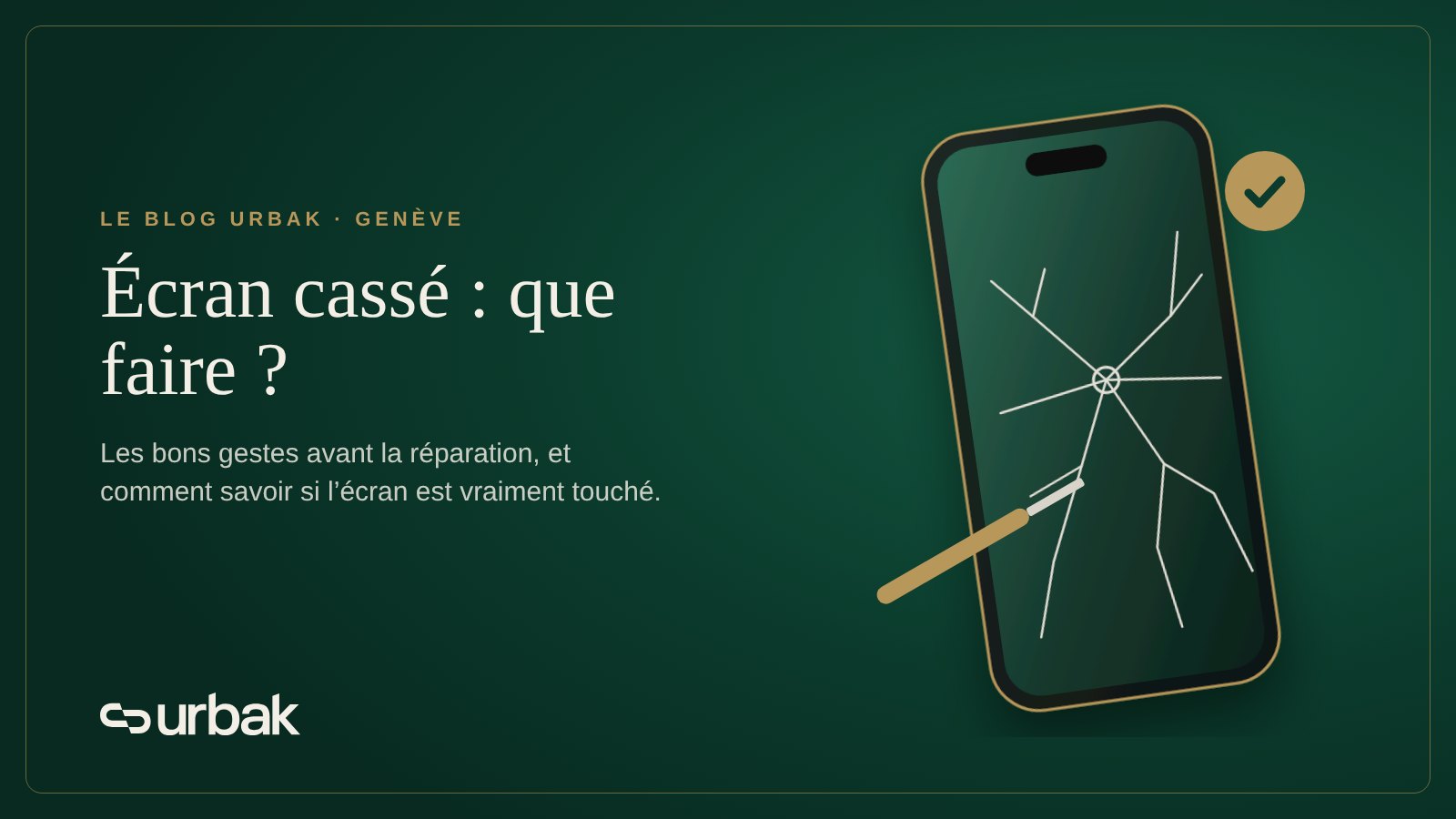
Is your screen cracked? What to do right away, how to tell whether the display itself is damaged, and why repairing is often better than replacing your phone.
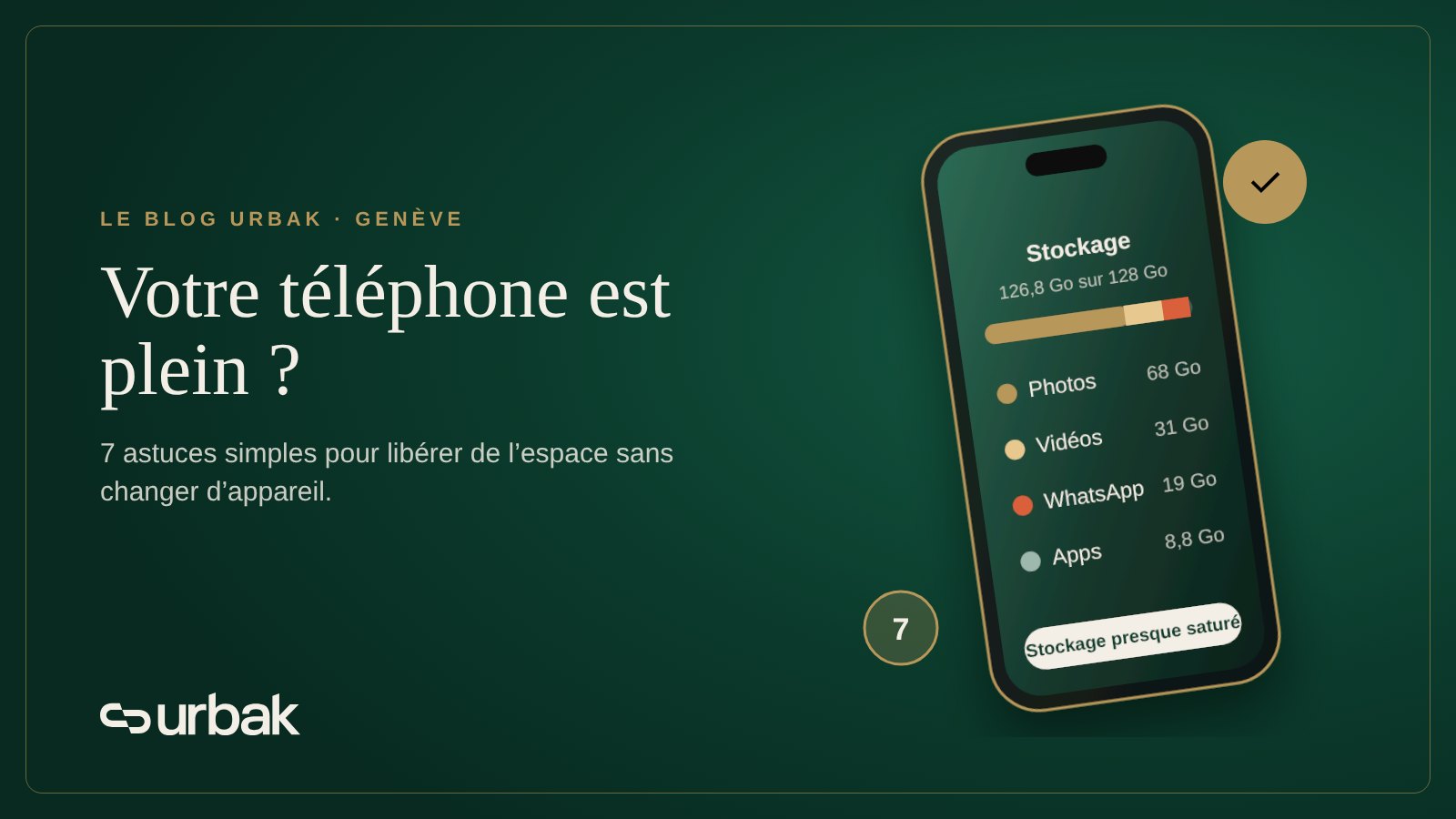
Running out of space on your phone? 7 simple tips to free up storage, speed up your smartphone and avoid replacing it too soon.
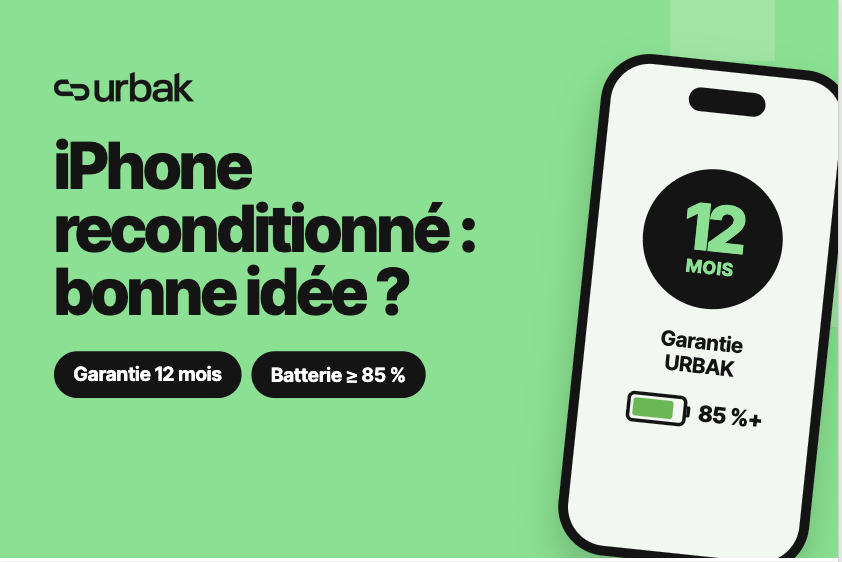
A refurbished iPhone costs much less than a new one. But how do you choose the condition, the battery and the seller? Our tips before buying in Switzerland.